Is a safer DeFi wallet the one with the most warnings, or the one that helps you understand what a transaction will actually do? That question matters more than the familiar “Rabby Wallet herunterladen” search suggests. A wallet is not merely a place to store coins. It is an interface between a user, a smart contract, a browser, and an often confusing collection of EVM networks. Rabby Wallet is designed around that interface problem: it supports more than 140 EVM-compatible chains, simulates transactions before signing, and adds risk signals for contracts, addresses, and token approvals.
For users in Germany and elsewhere in the European crypto market, the attraction is practical. Ethereum, Arbitrum, Optimism, Base, Polygon, Avalanche, and BNB Chain often require different network settings, fee assets, and bridge routes. Rabby attempts to reduce that operational friction. But reduced friction is not the same as reduced risk. The central issue is whether the wallet makes dangerous actions more visible without encouraging users to outsource judgment to an automated security label.
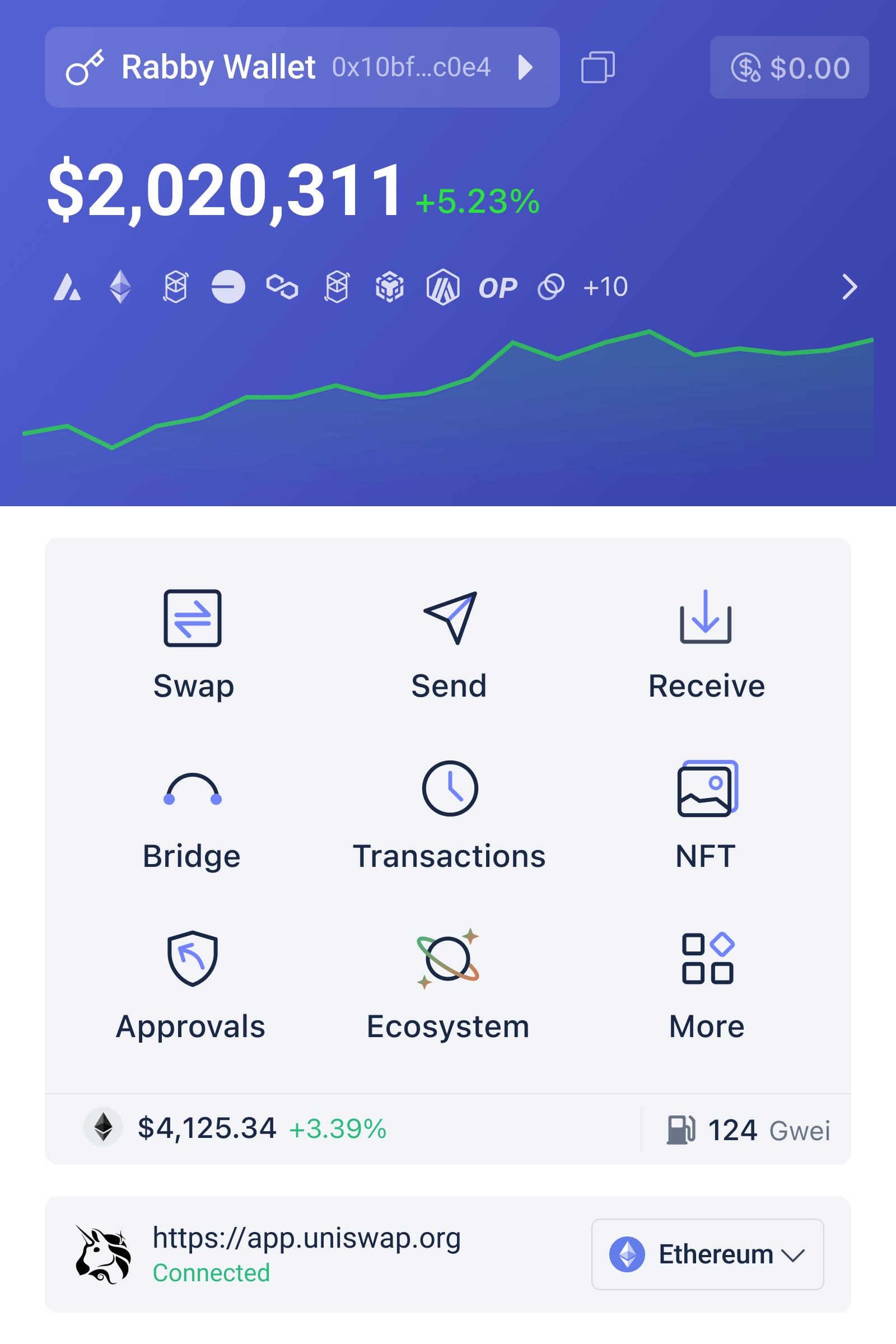
Rabby Wallet and MetaMask: Similar Job, Different Emphasis
Rabby is best understood as a non-custodial browser wallet and DeFi control layer, rather than as a bank account or an independent security authority. Like MetaMask, it allows a user to connect to decentralised applications, manage accounts, and sign messages or transactions. The difference is emphasis. Rabby is positioned as a direct alternative to MetaMask with a stronger focus on multi-chain workflows, transaction interpretation, and warnings before approval.
The distinction becomes clearer when looking at the network problem. In a traditional workflow, a user may need to select a chain manually, verify that the dApp is connected to the intended network, locate the correct native token for gas, and then interpret a contract request. Rabby can detect the network requested by a connected dApp and switch automatically. That is convenient, particularly for users moving between Ethereum layer-2 networks. Yet automatic switching can also hide an important fact: the same-looking asset and the same wallet address may exist across several chains, while liquidity, contract risk, and transaction costs differ substantially.
This is the first useful myth-versus-reality distinction. Myth: automatic network selection eliminates multi-chain risk. Reality: it removes one class of user error—manual network configuration—but does not verify that the dApp itself is legitimate or that the user intended to act on that chain. Convenience changes the probability of some mistakes; it does not remove the need to inspect the destination, asset, and contract.
Rabby’s architecture also deserves a precise explanation. Private keys are stored locally under the non-custodial model and are not sent to Rabby’s servers. The software is open source and released under the MIT licence, which permits community inspection of the code. These are meaningful properties, but neither should be treated as a guarantee. Open-source availability improves the possibility of review; it does not prove that every user is running an uncompromised build or that every dependency and connected website is safe.
The project’s recent messaging, dated August 23, 2026, presents Rabby as a general-purpose wallet for Ethereum and EVM networks and highlights access through Chrome and Brave extensions. That positioning is consistent with its core design: Rabby is most useful when a user interacts frequently with DeFi protocols rather than simply holding a small balance. Users considering a download should obtain the software through a verified official distribution path; a search result or a sponsored advertisement is not itself evidence of authenticity.
Why Transaction Simulation Is More Important Than a Balance Screen
A transaction simulation is not a prediction of the token price or a promise that a protocol will behave well in the future. Mechanically, it is a preliminary execution of the proposed call in an environment intended to show the expected result before the user signs. Rabby presents the anticipated changes to token balances and can flag risks such as phishing, known exploits, suspicious addresses, or unlimited token approvals.
This changes the user’s mental model from “click confirm” to “inspect state transition.” Suppose a dApp requests permission to spend a token. The important question is not simply whether the dApp looks familiar. It is how much authority the approval grants, to which contract, and for how long. An unlimited approval can be convenient because it avoids repeated permissions, but it can also enlarge the damage if the approved contract is compromised or malicious. A warning about an infinite approval therefore has practical value even when the transaction itself appears ordinary.
The same principle applies to swaps and liquidity operations. A user may expect to exchange one asset for another, while the underlying call includes several contract interactions, a fee, a routing step, or a different token than expected. Simulation can expose expected balance changes that are difficult to infer from a simplified front-end button. That makes it a useful defence against interface ambiguity, not a replacement for protocol research.
There is a boundary condition that experienced users should keep in view: a simulation is only as informative as the environment, contract state, and data available at the time. Blockchain state can change between simulation and mining. Some contracts may behave differently under conditions that are hard to reproduce, and a malicious interface may still mislead a user about what they are approving. Simulation can also show that a call is technically executable without proving that the economic outcome is attractive or that the protocol’s governance is trustworthy.
In other words, Rabby’s safety engine is closer to a sophisticated dashboard than to an insurance policy. It can improve visibility. It cannot reverse a valid signature that sends funds to the wrong address, protect a seed phrase copied into a fake website, or eliminate smart-contract risk. The safest workflow remains layered: confirm the domain, inspect the contract and network, read the balance changes, limit approvals where practical, and use a hardware wallet for significant holdings.
Where Rabby Adds Practical Value Across EVM Chains
Rabby’s multi-chain orientation is not only about supporting a long list of networks. It affects how users manage operational dependencies. A swap on one chain may require a particular gas token; a bridge may move value to another chain but leave the user without enough native currency to transact there; and a dApp may use a different contract address on each network. Rabby integrates bridge protocols such as LI.FI and offers an aggregator for swaps that can compare routes through decentralised exchanges such as Uniswap and 1inch.
Aggregation can improve execution, but “best rate” should not be interpreted too narrowly. A route with a favourable displayed exchange rate may involve more contract calls, a higher gas cost, additional bridge exposure, or greater slippage under changing liquidity. The economically relevant comparison is the expected received amount after fees, gas, price impact, and route-specific risk. Rabby can make route selection more accessible; it cannot turn all routes into equivalent risks.
The Gas Account feature addresses another common source of friction. Where supported, it allows users to pay network fees with stablecoins such as USDC even when they lack the native token of that chain. This is useful for someone who has funds on a network but cannot easily obtain a small amount of ETH, MATIC, or another gas asset. The trade-off is that the feature introduces another service component and another set of conditions. Users should understand the conversion, availability, and network assumptions rather than treating stablecoin gas as a universal substitute.
For security-conscious users, compatibility with Ledger, Trezor, and OneKey is arguably more important than a polished interface. A hardware wallet keeps the signing key in a dedicated device and can reduce the impact of malware on the computer. It does not, however, make a malicious transaction harmless. If the user confirms a deceptive approval on the hardware device, the device may faithfully sign the mistake. Rabby’s simulation and warning layer can complement hardware signing, but the two protections solve different problems.
Rabby Points, earned through activities such as swaps, gas funding, or referrals, belong in a separate mental category. A loyalty programme may encourage engagement, but points are not the same as yield, security, or guaranteed future value. Users should avoid increasing transaction frequency merely to collect rewards. In DeFi, additional activity can create extra fees, approval exposure, bridge risk, and taxable events depending on the user’s circumstances and local interpretation.
How to Decide Whether Rabby Fits Your Use Case
A useful decision framework has three questions. First, how often do you move between EVM chains or interact with DeFi contracts? If the answer is rarely, a simpler wallet may create less cognitive load. If the answer is frequently, automatic network handling, simulation, approval warnings, and integrated routing may address real workflow problems.
Second, what is your threat model? A browser extension is exposed to the normal risks of the web: phishing, malicious or compromised dApps, browser extensions, operating-system malware, and social engineering. Local key storage protects against a service provider holding the key, but it transfers responsibility to the user’s device and backup process. A strong password, secure seed-phrase storage, separate accounts for experimentation, and hardware signing for larger balances remain relevant.
Third, do you understand what you are signing? This is the decisive test. If the simulation shows an unexpected asset leaving the wallet, a large allowance, an unfamiliar contract, or a route across a bridge you did not intend to use, stop—even if the interface labels the transaction as available. A warning is useful because it starts a question. It is not useful if the user treats it as a traffic light that can be ignored whenever the colour is green.
Looking ahead, the most important signal is not simply whether Rabby adds more chains. The harder design challenge is whether wallet interfaces can explain increasingly complex actions without overwhelming users. As bridges, aggregators, account abstraction features, and stablecoin-based fee systems become more common, a single “confirm” screen may represent several distinct risks. If transaction simulation becomes more accurate, more legible, and easier to audit, wallets could shift from passive key managers toward active transaction interpreters. That would be valuable—but only if users retain the ability to inspect raw details when the automated summary is uncertain.
Frequently Asked Questions
Is Rabby Wallet safer than MetaMask?
It is more accurate to say that Rabby emphasises different safety and multi-chain features, including transaction simulation, security warnings, and automatic network selection. Those features may reduce certain user-interface mistakes. They do not remove phishing, device compromise, smart-contract, bridge, or signing risks. The safer choice depends on the user’s workflow, habits, and threat model.
Can I use Rabby without holding the native gas token?
In supported situations, Rabby’s Gas Account can allow network fees to be paid with stablecoins such as USDC. Availability and conditions depend on the relevant network and service design. Users should still review the fee conversion and transaction details, because stablecoin-based gas changes the payment mechanism but does not eliminate transaction costs.
Does transaction simulation guarantee that a DeFi transaction is safe?
No. Simulation can display expected balance changes and identify some known or detectable risks before signing. It cannot guarantee future contract behaviour, economic profitability, website authenticity, or the absence of every exploit. Treat it as an additional verification layer alongside domain checks, limited approvals, independent protocol assessment, and hardware-wallet use for material amounts.
Where should a user begin when looking for a Rabby browser wallet?
Begin with a verified distribution source and confirm that the extension or application is intended for your browser or operating system. Never enter a recovery phrase into a website claiming to “activate” the wallet, and test a new setup with a small amount before transferring significant funds. For an educational starting point on the rabby wallet, focus first on installation authenticity, account recovery, and transaction review rather than promotional rewards.
Rabby’s strongest proposition is therefore not that it makes DeFi safe by itself. It is that it can make the consequences of a proposed action more visible across a complicated EVM landscape. That is a meaningful improvement over blind signing, but it works only when the user treats visibility as an invitation to reason. The right question after a Rabby Wallet download is not “Can this wallet prevent every loss?” It is “Does this wallet help me notice the loss I am about to authorise?”
Leave a Reply